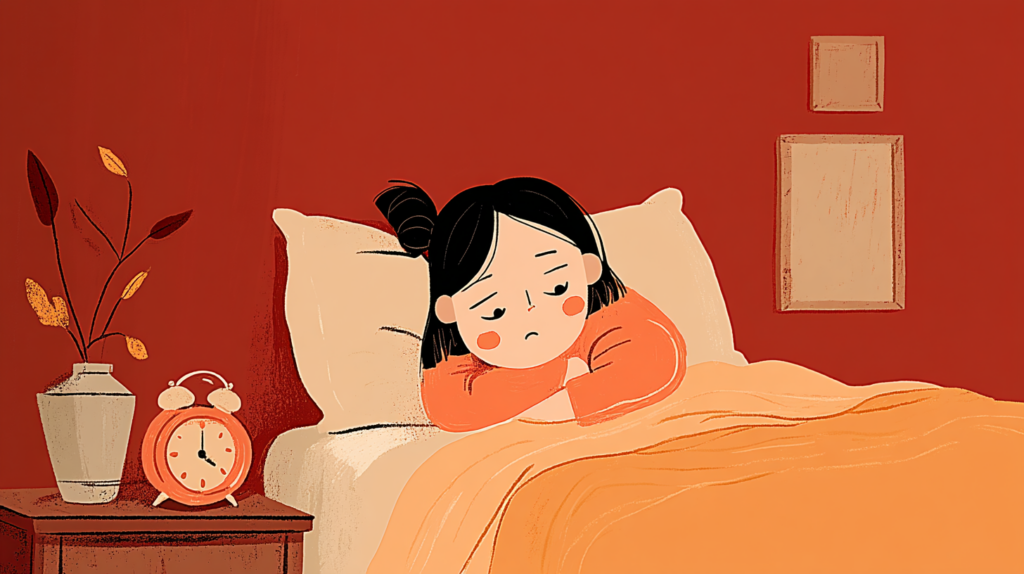
If your pre-schooler is exhausted but struggling to fall asleep, or waking frequently overnight, you’re not alone. Sleep issues are incredibly common at this age, and while routines matter, sleep challenges are rarely “just behavioural.”
Sleep is a biological process, and nutrition plays a much bigger role than most parents realise.
Why sleep problems aren’t just behavioural
Many sleep struggles in pre-schoolers are driven by immature nervous systems, circadian dysregulation, rapid brain development, and big emotional days, plus genetic differences in brain chemistry. We can’t just blame poor parenting or “bad habits.” Most of us are doing our best with what we know!
When children are overtired, anxious, under-fuelled, or experiencing blood sugar swings, their nervous systems can struggle to switch into rest mode. This often shows up as bedtime resistance, hyperactivity, meltdowns, or early waking. Or more often a terrifying combination of these!
Understanding what’s happening in little bodies helps us as parents to respond with more compassion and more effective strategies.

The Top 4 sleep neurotransmitters (explained simply):
Your child’s brain relies on several key chemicals to fall asleep and stay asleep:
- Melatonin – helps regulate the sleep–wake cycle
- Serotonin – supports calm mood and is the building block for melatonin
- Adenosine – builds sleep pressure the longer your child is awake
- GABA – keeps the nervous system calm and supports staying asleep
- More are involved, too
Making these sleep chemicals every day is not a given. Without the nutritional and environmental building blocks to create them, the body goes into preservation mode and deficiencies will start to form.
Protein, carbs, fats & micronutrients for sleep
A sleep-supportive diet isn’t about daily perfection, it’s about balance over time.
- Protein (especially at dinner) provides amino acids needed for sleep neurotransmitters
- Complex carbohydrates support fullness and steady blood sugar, helping kids settle more easily
- Healthy fats support brain health and absorption of fat-soluble nutrients (like DHA and vitamin D)
- Key micronutrients for sleep include magnesium, B vitamins, zinc, iron, tryptophan and choline – all of which are found in whole food proteins, fibre and fats!
Together, these nutrients provide the components the brain needs to feel safe, calm, and ready for sleep.
What a sleep-supportive day of eating looks like

Think simple and consistent:
- Regular meals and snacks for growing bodies (to avoid blood sugar dips, aka meltdowns!)
- Protein at every meal, especially dinner (toddlers don’t need a lot – around 14 g minimum/day)
- Plenty of colourful plant foods for gut and brain health (rainbow food fuels GABA production)
- No carb-only or sugary snacks close to bedtime (full fat or fibre and protein-rich snack if needed)
It’s not all about restricting bad foods, it’s more about steady, balanced fuel for growing bodies and active brains.
A gentle note on supplements
Most children do not need sleep supplements when their diet and routines are supportive. Nutrients are always best absorbed from food.
In some cases such as anxiety, neurodevelopmental differences, gastrointestinal issues or clear dietary gaps, targeted supplementation may be helpful, but this should always be guided by a qualified health professional.
If sleep or meal times feels persistently hard, or you just have run out of food ideas, you don’t have to navigate it alone. Book in a paediatric consult so we can dive in and look at all the factors affecting your family.
“Supporting sleep in our kids is about working with biochemistry, not fighting it. Incremental, thoughtful changes to what your family eats can make a meaningful difference for your child, and for your sleep, too.”
Kerrie-Anne Crosby
KA Naturopath BHSc (Nat)
GET IN TOUCH
You are not alone.
*Content co-created with Sarah Megens, sleep OT. Visit Eastside Midwives Collective for more information, or email her at sarah@eastsidemidwives.com
References:
Pattnaik, H., Mir, M., Boike, S., Kashyap, R., Khan, S. A., & Surani, S. (2022). Nutritional Elements in Sleep. Cureus, 14(12), e32803. https://doi.org/10.7759/cureus.32803
Reynolds, A. M., Spaeth, A. M., Hale, L., Williamson, A. A., LeBourgeois, M. K., Wong, S. D., Hartstein, L. E., Levenson, J. C., Kwon, M., Hart, C. N., Greer, A., Richardson, C. E., Gradisar, M., Clementi, M. A., Simon, S. L., Reuter-Yuill, L. M., Picchietti, D. L., Wild, S., Tarokh, L., Sexton-Radek, K., … Carskadon, M. A. (2023). Pediatric sleep: current knowledge, gaps, and opportunities for the future. Sleep, 46(7), zsad060. https://doi.org/10.1093/sleep/zsad060
Varinthra, P., Anwar, S. N. M. N., Shih, S. C., & Liu, I. Y. (2024). The role of the GABAergic system on insomnia. Tzu chi medical journal, 36(2), 103–109. https://doi.org/10.4103/tcmj.tcmj_243_23
Watson, C. J., Baghdoyan, H. A., & Lydic, R. (2010). Neuropharmacology of Sleep and Wakefulness. Sleep medicine clinics, 5(4), 513–528. https://doi.org/10.1016/j.jsmc.2010.08.003