We spend a lot of time chasing the sun, but what if a key to your health is actually found in the dark?
In our modern, always-on world, we’ve effectively deleted the night, surrounding ourselves with artificial light at night (ALAN) that keeps our brains in a state of perpetual noon. This isn’t just about being a bit tired, it’s about a fundamental mismatch between our internal clocks and the environment, a condition researchers now call the “Circadian Syndrome”.
Here are five reasons why you should embrace the darkness:
1. The “Fridge Light” Sabotage
You might think a quick midnight snack is harmless, but your master clock, the suprachiasmatic nucleus (SCN), is incredibly sensitive to even brief bursts of light. The SCN uses photic information from your retina to tell your body what time it is.
Just 20 seconds of looking into a bright fridge light at night can inhibit your production of melatonin for a staggering 22 minutes. Every time you flip that switch, you’re essentially telling your brain to “reset” the day, causing significant circadian misalignment.
Think about using very dim, low-light lamps only if you must get up during the night. And stay away from the fridge!
2. Melatonin: The Night’s Master Antioxidant
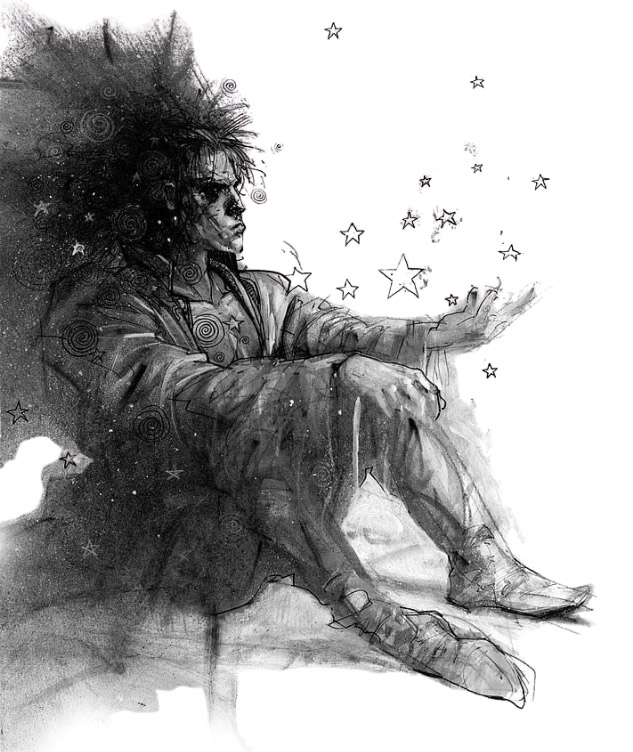
Melatonin is often called the “night hormone,” but its job goes far beyond just making you sleepy. It is a powerful antioxidant that supports immune regulation, bone formation, and cardiovascular function. Crucially, research shows that melatonin can even inhibit the growth of certain tumors, making the darkness a critical component of your body’s natural anti-cancer defense system.
Melatonin depletion by light exposure late at night stimulates the growth of multiple human cancer xenografts, and increases drug resistance.
(Lee, Field & Sehgal, 2021)
*A visual interpretation of melatonin, The Sandman. Artist: Eddy Newell
3. The “Amber Shield” Strategy
The problem with modern lighting, especially bright LED, is the high concentration of blue light. While blue light is great for alertness in the morning, at night it acts as a chemical signal that suppresses melatonin production.
To protect your circadian health, research suggests wearing blue-blocking glasses (with amber lenses) for 2–3 hours before bed, if you are exposed to light (including screens!). If you can, swap out your bright white overhead lights for amber, orange or red-hued bulbs, which do not trigger the same “daytime” response in the brain. Think about using low-light lamps or even candles for better circadian alignment.
4. The 3-Hour Sunset Rule
Your body wasn’t designed to go from a bright office straight to a dark bedroom. There is a natural transition period that begins at sunset, when the disappearance of blue light triggers the gradual release of melatonin about 2–3 hours later.
To help with circadian entrainment, aim for a bedtime that falls within 3 to 3.5 hours after sunset. This alignment ensures your sleep-wake cycle stays consistent with the natural solar day, which is vital for metabolic health and preventing the clinical clustering of risk factors like insulin resistance and hypertension.
5. Rewilding Your Evening Environment
If you must have light after the sun goes down, look to the past. Before electricity, we used fire. Candlelight and campfires provide red and near-infrared light, which do not disrupt your circadian rhythms the way screens do. These frequencies can even aid sleep and stimulate the production of brain-healing proteins like BDNF (brain-derived neurotrophic factor).
In the hours after sunset, minimise lighting generally. Turn off the big overheads, put away the smartphone, and use dim, warm-toned lamps to signal to your SCN that it is time for the “rest and repair” phase of your 24-hour cycle.
In summary: Embrace the Dark
We’ve spent decades trying to outrun the dark, with LEDs and white fluorescents helping us work late into the night, but the science is clear: our cells need the darkness to heal. By dimming the lights, you are giving your body the “shadow medicine” it’s been craving.
“When we nourish the mother, we support not only her health but the wellbeing of her entire family.”
Kerrie-Anne Crosby
KA Naturopath BHSc (Nat), 2026
FEEL LIKE YOU ARE STRUGGLING WITH YOUR HEALTH? GET IN TOUCH
You are not alone.
References:
Alanazi, M. A. (2026). Chronotherapy: An innovative approach to maximize drug efficacy, reduce side effects, and improve patient outcomes through aligning with the body’s circadian. Annals of Clinical and Analytical Medicine. https://acamedicine.org/article/10-4328-acam-22898/
Amiama-Roig, A., Verdugo-Sivianes, E. M., Carnero, A., & Blanco, J. R. (2022). Chronotherapy: Circadian Rhythms and Their Influence in Cancer Therapy. Cancers, 14(20), 5071. https://doi.org/10.3390/cancers14205071
de Menezes-Júnior, L. A. A., Sabião, T. D. S., Carraro, J. C. C., Machado-Coelho, G. L. L., & Meireles, A. L. (2025). The role of sunlight in sleep regulation: analysis of morning, evening and late exposure. BMC public health, 25(1), 3362. https://doi.org/10.1186/s12889-025-24618-8
Fishbein, A. B., Knutson, K. L., & Zee, P. C. (2021). Circadian disruption and human health. The Journal of clinical investigation, 131(19), e148286. https://doi.org/10.1172/JCI148286
Forrester, J., & John, K. (2026). The Nuanced Naturopaths. Strategic light exposure strategies [Chart].
Lee, Y., Field, J. M., & Sehgal, A. (2021). Circadian rhythms, disease and chronotherapy. Journal of Biological Rhythms, 36(6), 503–531. https://doi.org/10.1177/07487304211044301
Neuroscientifically Challenged. (2014, June 3). 2-minute neuroscience: Suprachiasmatic nucleus [Video]. YouTube. https://www.youtube.com/watch?v=DHpCBmq_z60
Richards, J., & Gumz, M. L. (2012). Advances in understanding the peripheral circadian clocks. FASEB journal: official publication of the Federation of American Societies for Experimental Biology, 26(9), 3602–3613. https://doi.org/10.1096/fj.12-203554